Skip to content


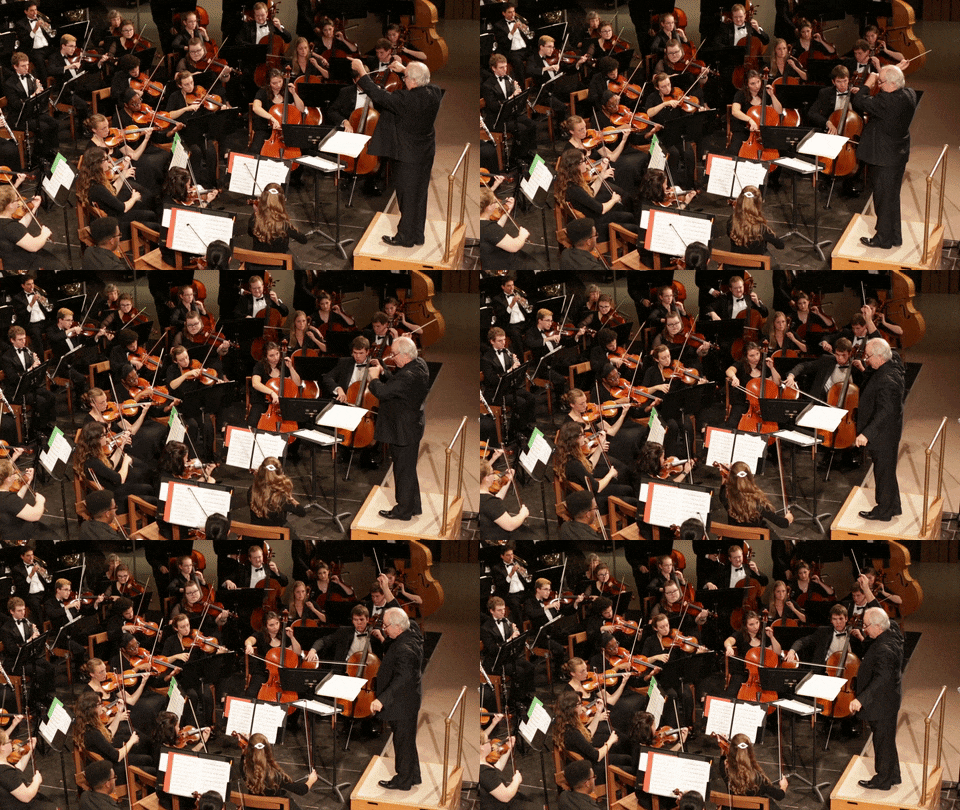
Every elite leader I work with shares one defining habit.
They do not blame the team first.
They examine their rhythm.
Because the pace of the leader becomes the pace of the business.
Not the strategy deck.
Not the org chart.
You.
The Leadership Reflex That Quietly Kills Performance
When results dip, most leaders look outward.
We need stronger talent.
People are not executing.
The team lacks urgency.
Sometimes that is true.
But more often they are symptoms, not causes.
Here is what the data shows:
Forty seven percent of performance problems start with unclear leadership rhythm.
Seventy percent of execution breakdowns trace back to decision bottlenecks at the top.
If your organization feels reactive or scattered, it is usually mirroring your operating rhythm.
Teams do not drift randomly.
They synchronize.

Why Rhythm Beats Motivation Every Time
Elite leaders know this.
You cannot motivate your way out of misalignment.
You cannot communicate your way out of chaos.
Rhythm sets the rules people actually follow.
If you respond instantly to everything, the business becomes reactive.
If priorities shift weekly, focus fractures.
If decisions stall, momentum fades.
People do not follow the words.
They follow the pattern.
Stat: Teams are three times more likely to execute consistently when the leader models consistent rhythm.

The Real Reason High Performers Burn Out
Burnout rarely comes from workload alone.
It comes from inconsistent rhythm.
Urgency without clarity.
Speed without recovery.
Pressure without pause.
The numbers back it up.
Leaders operating at reduced cognitive bandwidth cause a thirty nine percent drop in team performance.
Seventy six percent of high performers burn out because the leader’s rhythm keeps shifting.
This is not a wellness issue.
It is a performance constraint.
Elite leaders protect their energy the same way they protect capital. Because they know it compounds.

The Shift Elite Leaders Make
They stop asking why the team is not stepping up.
They start asking what pace they are setting.
They audit:
How decisions flow
Where attention leaks
What gets rushed
What gets protected
What rhythms reinforce focus
Then they adjust the system, not the people.
That is why their teams move faster with less friction.
That is why alignment feels natural.
That is why execution becomes repeatable.
Stat: Organizations with strong leadership rhythm grow revenue thirty two percent faster on average.

A Simple Check for CEOs
Ask yourself this week:
Does my calendar reflect my true priorities?
Do my actions reward clarity or constant urgency?
Am I modeling sustainable speed or silent chaos?
If the business feels off beat, do not look for louder instructions.
Fix the rhythm.
Because once the leader’s pace changes, the entire organization recalibrates.